
Vodka & Neutral Spirits Library / Guide 09
Final Adjustments& Bottling
Consistency, finishing & packaging.
Before vodka reaches the bottle, the producer has to make sure the liquid is consistent, clear and at the intended final specification. This guide follows the last production decisions from blending and permitted adjustment to filtration, final checks and packaging.
Scope Guide 08 covers water and dilution. Guide 07 covers activated carbon. Here, the focus is the final finishing and bottling stage.
Start with consistency → Continue where you left off →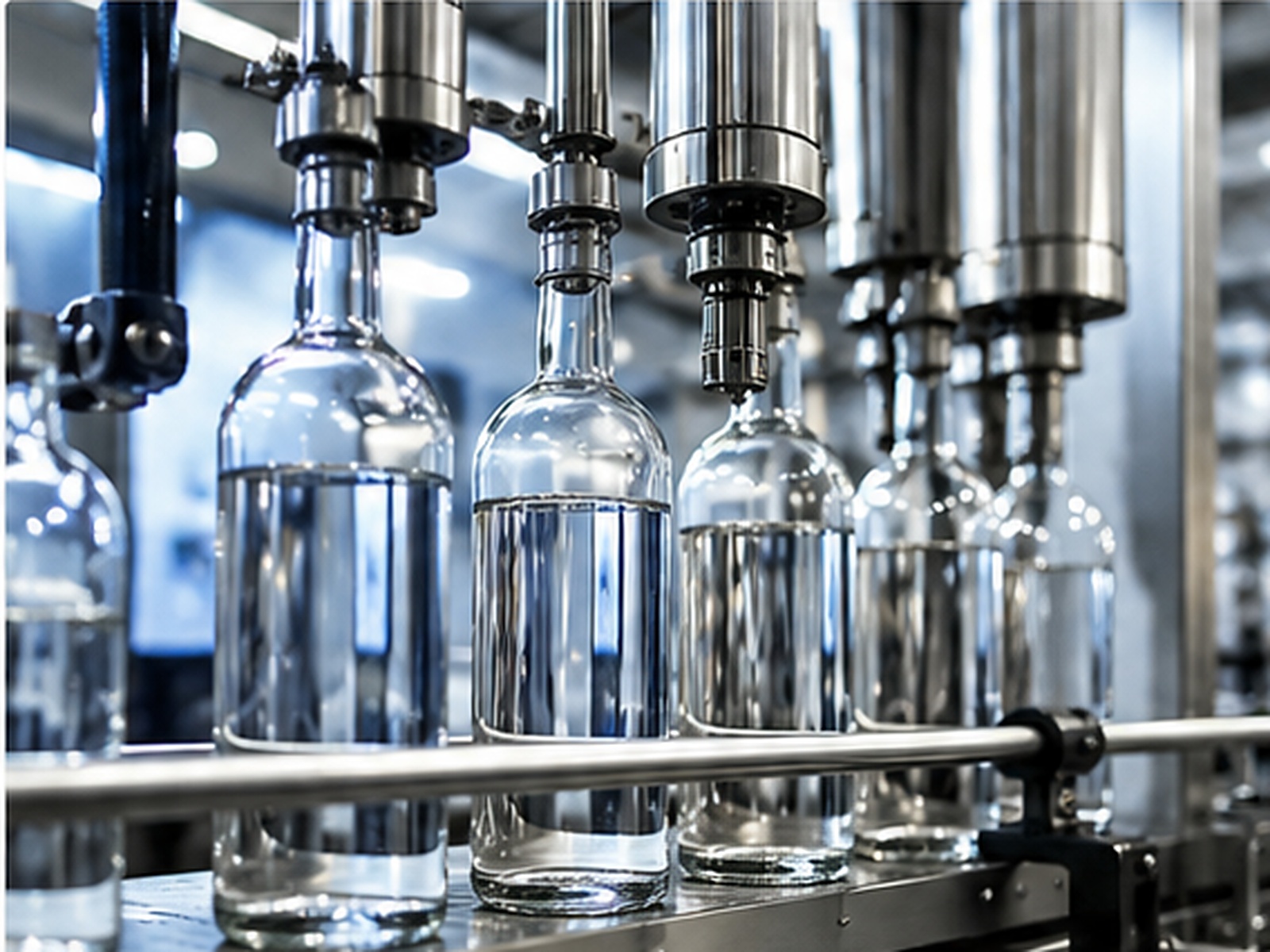
Guide sequence
Follow the final production steps that take a finished vodka from batch consistency through adjustment, polishing, verification and bottling.
Blend for consistency
Blending is not only about creating complexity. It is also one of the main ways a producer keeps a vodka consistent from batch to batch.
Small differences can exist between production runs even when the process is tightly controlled.
Batches can be brought together so the final blend matches the intended house style.
The producer confirms that the blend meets the expected sensory and technical specification.
Why bartenders should care
When a familiar vodka tastes consistent across different bottles, that consistency is the result of production control. Blending can be part of that control even when the product is completely unaged.
A producer works toward a repeatable target instead of expecting every production batch to be naturally identical.
Small adjustments, where permitted
Some vodka regulations allow limited finishing adjustments. The purpose is usually to refine the final balance, not to turn the spirit into a strongly flavoured product.
Small amounts of permitted sweetening can soften the sensory balance. The exact allowance depends on the market and category rules.
Some markets permit tightly controlled additions that can influence the final organoleptic profile. These are legal questions before they are recipe questions.
If added flavour becomes the defining character, the product may move into a different legal or commercial category.
Do not turn one rule into a global rule
Vodka laws differ between jurisdictions. A finishing adjustment that is permitted in one market may be limited, described differently or not permitted in another. Guide 10 will handle the exact legal definitions and limits.
The European Union, for example, permits limited sweetening of vodka to round the final taste. That is a legal allowance, not evidence that every vodka is sweetened.
Final filtration is about presentation and stability
A producer may use a final physical filtration step to remove particles or material that could create haze in the finished vodka.
Larger particles can be removed before the vodka reaches its final packaging stage.
Smaller particles can be captured with a finer filter when a bright, clear appearance is required.
Cooling can make some dissolved material come out of solution so it can be filtered before bottling.
Activated carbon can change dissolved aroma and flavour compounds. That mechanism belongs in Guide 07.
Why chill filtration exists
Some compounds remain dissolved when the spirit is warmer but become visible as haze when it is chilled. Removing those materials before bottling can help a clear vodka stay visually bright when served cold.
Final physical filtration is mainly about removing material from the liquid. Activated-carbon treatment is about adsorption and can change the spirit’s sensory character.
Check the final liquid
Before filling begins, the finished vodka has to match the producer’s technical and sensory target.
The strength is measured after proofing rather than assumed from the amount of water that was added.
The liquid is inspected for haze, particles or other visible defects before filling.
A final tasting or quality check helps confirm that the batch is consistent with the intended product.
One batch, one record
Commercial bottling depends on traceability. Producers record the batch, final strength and packaging run so a finished bottle can be connected back to its production information.
Bottling is not the stage where the producer hopes the vodka will become correct. The important specifications are checked before the liquid is packaged.
Bottle and close
Packaging has one simple job: contain and protect the finished vodka without introducing unwanted change.
It does not normally react with the spirit and allows the producer to package the finished liquid without adding flavour.
Screw caps, stoppers and other closures are selected to keep the bottle secure and limit unwanted exchange with the outside environment.
Filling is a controlled process
A bottling line fills to the intended volume, applies the closure and prepares the bottle for labelling and distribution. The goal is repeatability: each bottle should contain the same product in the same condition.
When a natural cork closure is used for a spirit, upright storage limits prolonged contact between the high-strength liquid and the cork.
Packaging protects; it does not mature the vodka
Once bottled, an unaged vodka is intended to remain stable. The bottle is a container for the finished style, not a maturation vessel.
A sound closure reduces evaporation, leakage and unwanted exchange with the environment.
Stable storage away from excessive heat and direct light helps protect the packaged product and its presentation.
Packaging can protect the vodka, but it does not prove the quality of the liquid inside it.
Where Guide 09 stops
The production journey is now complete. The next question is legal and commercial: what can the bottle actually say about the vodka, its raw material and its identity?
Blending, permitted adjustment, filtration and quality checks create the final specification. Bottling preserves that result for the bar and the guest.
Remember the finishing stage
Consistency before packaging
- Blending can be used to keep batches consistent
- Final adjustments depend on the rules of the market
- Physical filtration can protect clarity and stability
- Final ABV and sensory profile are checked before bottling
Remember the bottle
Packaging protects the result
- Glass is widely used because it is inert
- The closure must seal the bottle reliably
- Upright storage is sensible when spirits use cork closures
- Premium packaging is not proof of premium liquid
REFSources & Further Reading
The WSET Level 3 Spirits study book is the teaching backbone. The external references below are included for current regulatory context; Guide 10 will handle the legal detail.
Continue the sequence
Guide 10 · Vodka Law, Labels & Geographic Identity
Finish with the legal category, label reading and protected origin.