Sugar, slavery and early rum shaped Barbados
Rum developed inside Barbados’ seventeenth-century sugar economy. Understanding that system explains both the raw material and the historical conditions from which the island’s cane spirits emerged.
From sugarcane to early cane spirit
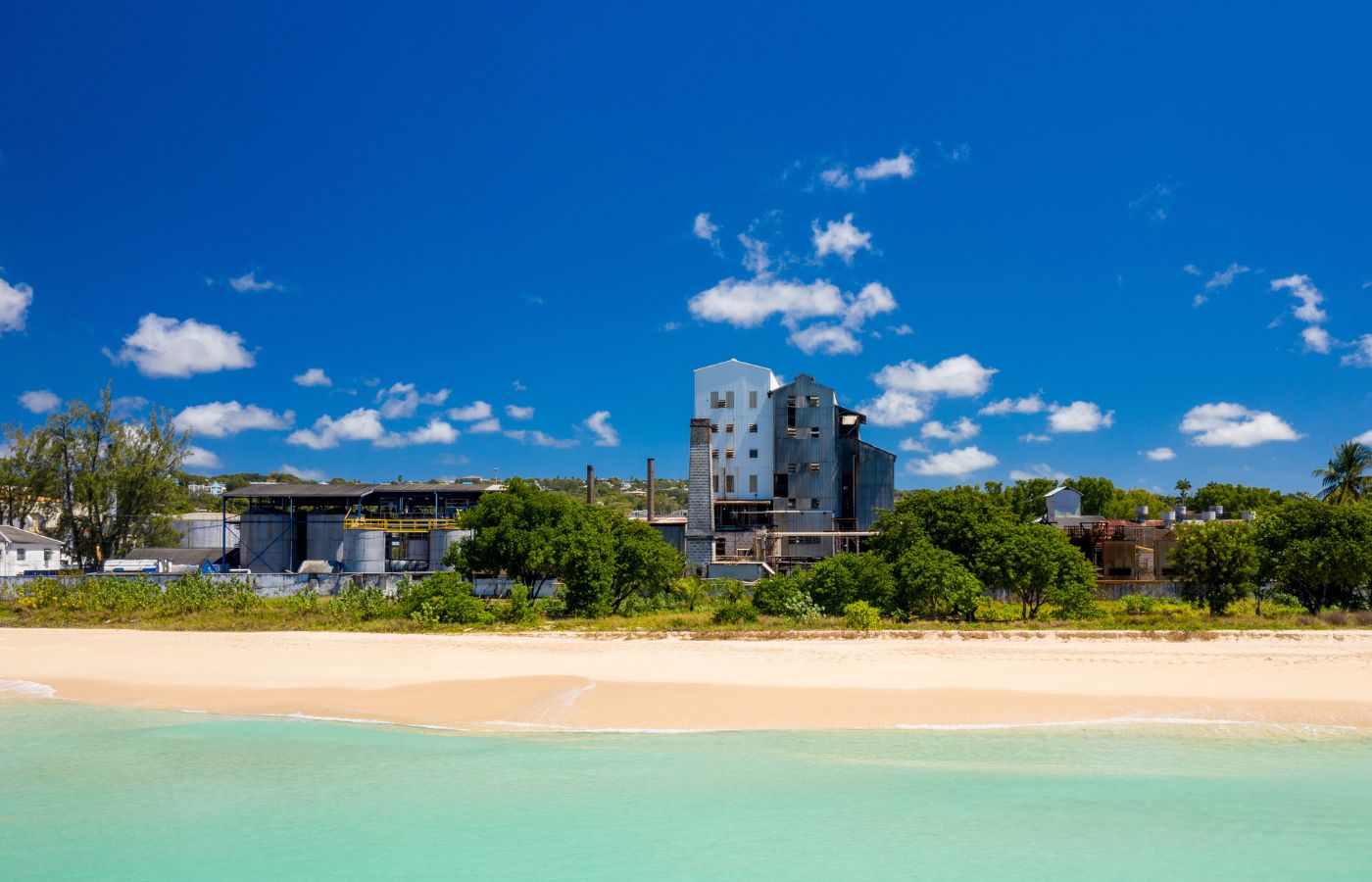
During the seventeenth century, Barbados became one of the earliest successful sugar economies in the English Caribbean. Sugar manufacture produced liquids rich in fermentable sugars, creating the material basis for distilled cane spirits.
Richard Ligon’s 1657 account of Barbados describes an island spirit known as kill-devil, made from material generated during sugar production. This account is among the Caribbean’s strongest early written records of cane-spirit production.
The plantation system
The expansion of sugar and rum depended on a plantation economy built through enslaved African labour. Cane cultivation, sugar manufacture, distillation, shipping and Atlantic trade formed one connected production system.
Mount Gay’s surviving record from 1703 adds an important line of producer continuity to that history and places the distillery among the world’s longest-documented rum producers.
By the mid-seventeenth century, written accounts were already linking Barbados sugar manufacture with local cane-spirit distillation. The island’s early rum history grew directly from its sugar economy.
Barbados uses more than one cane route
Compare three Barbadian examples: Mount Gay works from molasses, St. Nicholas Abbey concentrates estate cane juice into syrup, and Stade’s WIRD documents fresh-cane-juice research alongside its wider rum production.
Barbados producers use different fermentation routes
Mount Gay and Stade’s WIRD show how yeast choice and fermentation time can be adjusted deliberately to create different distillate components.
Barbados distillers configure stills in different ways
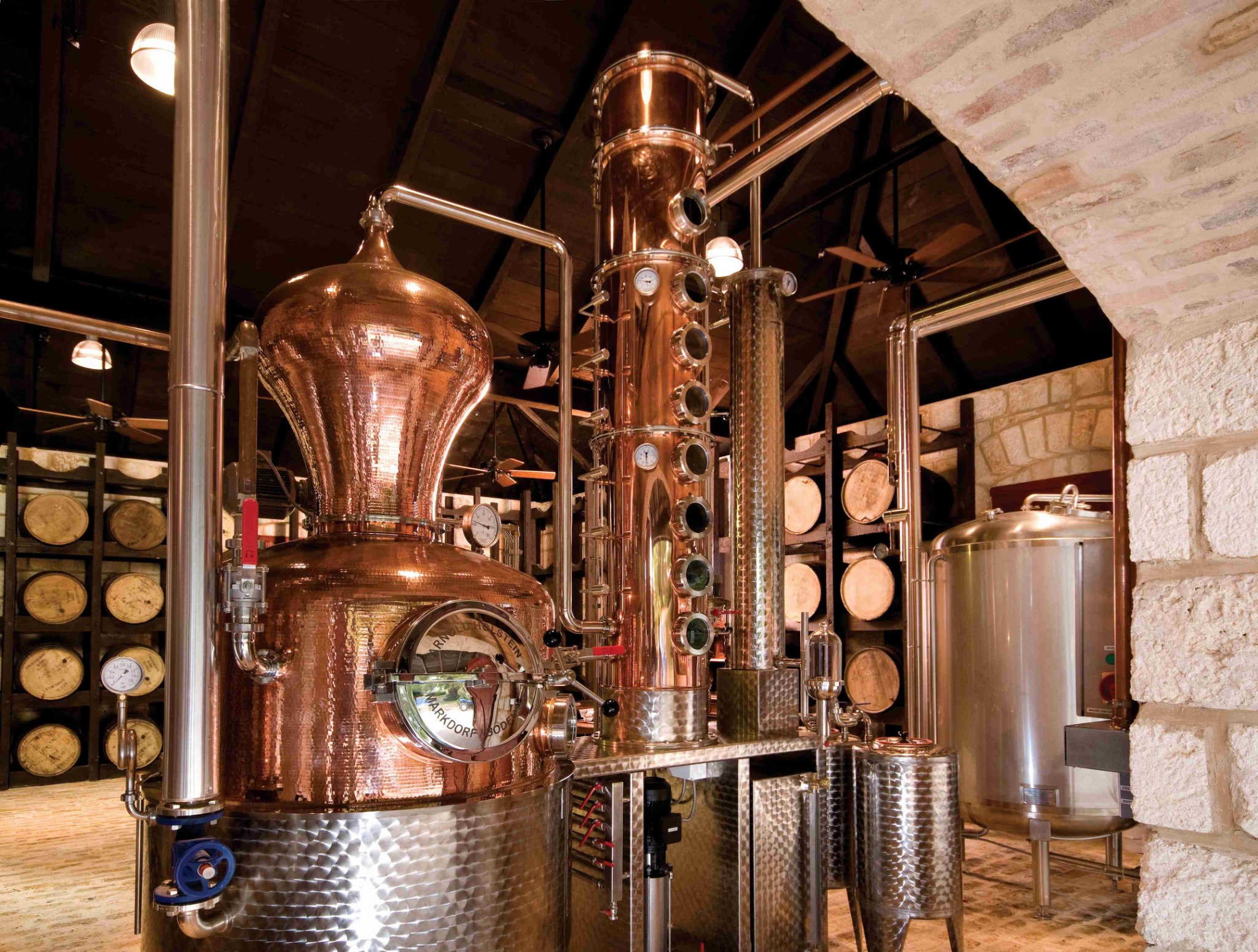
Foursquare, Mount Gay, Stade’s WIRD and St. Nicholas Abbey use different combinations of batch and continuous distillation. Compare the equipment, then follow how each system separates and concentrates the fermented wash.
Follow the vapour through the system.
Primary pot: the fermented wash is heated and alcohol-rich vapour leaves the pot. Low-wine retort: the vapour bubbles through a liquid charge, transferring heat and producing another enriched vapour. High-wine retort: a second vapour-liquid stage increases enrichment again. Condenser: the final vapour is cooled back to liquid spirit for collection.
At Foursquare, this batch route operates alongside a traditional twin-column Coffey system, giving the distillery distinct components for maturation and blending.
Barbados maturation follows more than one route
Compare maturation entirely in Barbados with a documented Barbados-to-France double-ageing programme, then read the age statement through the CARICOM framework.
How to read an age statement
Under CARICOM CRS 25:2008, an age declared for a blended rum refers to the youngest rum in that blend. The standard’s matured-rum designation begins after at least one year in wooden vats or barrels.
A twelve-year age statement therefore means at least twelve chronological years for the youngest rum in the blend.
Elapsed time remains chronological
Warm conditions can accelerate extraction, reaction and evaporation, but there is no reliable formula that converts one year in Barbados into a fixed number of years in Scotland or continental Europe.
Read age together with cask history, location, warehouse conditions, entry strength and the character of the distillate.
Different components give the blender a palette
The previous chapters explain why Barbados distilleries create different ferments, distillates and cask lots. Blending is where those components become one finished release.
Why make several rums for one bottle?
Because each component can contribute something different to the finished structure. A blender can select across distillation route, fermentation programme, age and cask history, then combine the chosen lots in deliberate proportions.
Mount Gay and Foursquare make this especially easy to see because both produce distinct batch- and continuously distilled components that can later meet in the blend.
Mount Gay
Mount Gay produces pot- and column-distilled components and brings those streams together through maturation and blending. The result shows how separately distilled components can be assembled into one finished Barbados rum.
Foursquare
Foursquare’s double-retort pot system and twin-column Coffey still create separate components. Authorized Exceptional Cask Selection releases provide documented examples of those components being matured and blended into one rum.
A pot-and-column blend combines separately distilled components in one release. Producers can mature and assemble those components according to the profile they want to build.
Read Barbados through its distilleries
The three major distilleries give the island its broad commercial production base. St. Nicholas Abbey adds a smaller estate-scale route, and newer projects show that Barbados rum continues to evolve.
Foursquare 2013
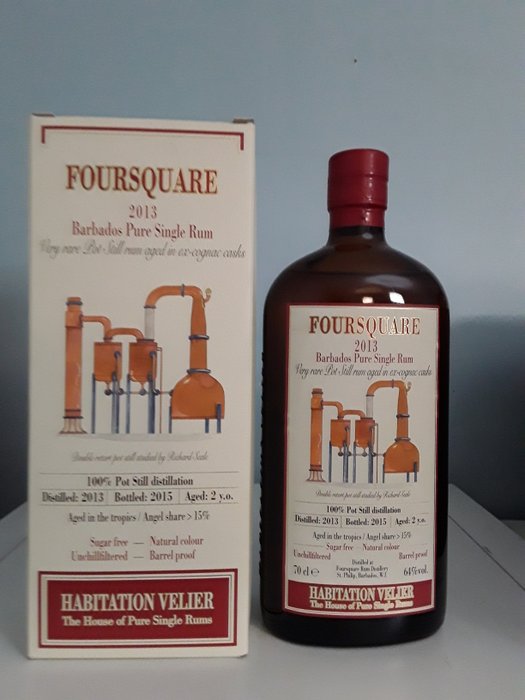
Foursquare is usually taught through both sides of its production system: double-retort pot still and twin-column Coffey distillation. This bottle is valuable because it isolates one side of that system. The front label states "100% pot still distillation", helping the student see that a distillery known for several production routes can also release one component on its own.
Why it matters. This is a clean academy example of how label-reading can reinforce production learning. Foursquare usually explains how separate pot and Coffey components can later be blended; this bottling shows that one of those components can also stand on its own.
New small-scale distilling is entering the island’s story.
Hopewell Distillery, home of Perkins & Sons, is now producing small-batch rum in Barbados. It adds a newer small-scale producer to the contemporary island picture.
Planteray — formerly Plantation Rum — is the brand. Stade’s West Indies Rum Distillery is the Barbados distillery behind its Barbados production.
How to read Barbados on the label
A bottle can tell you origin, producer, strength, age and sometimes production detail. The legal framework behind that information comes from regional rum standards and Barbados’ own geographical-indications system.
| Framework | What it does | How to read it |
|---|---|---|
| CARICOM CRS 25:2008 | Provides the regional specification for rum, including maturity and age-language provisions. | Use it when interpreting the legal meaning of rum, matured rum and stated age within the CARICOM framework. |
| Barbados GI law | Provides Barbados with a legal mechanism for registering and protecting geographical indications. | The national GI system exists independently of the rum standard. |
| Barbados Rum GI proposals | Industry groups have developed Barbados-specific GI proposals, with disagreement over some production requirements. | The proposals are separate from CARICOM CRS 25:2008 and from Barbados’ existing GI legislation. |
Read the bottle in sequence
1. Producer or distillery. 2. Barbados origin. 3. Age or NAS wording. 4. ABV. 5. Disclosed still, raw material, cask, finish or maturation location.
The label may reveal only part of the production story, so producer technical information can add useful detail.
Age has a legal meaning
Colour records appearance. Under the CARICOM framework, a declared age for a blend refers to its youngest rum. Production and maturation details come from the label and documented producer information.
Taste with a production hypothesis
Production knowledge becomes useful when it helps you ask better questions in the glass. Predict first, taste carefully, then revise your explanation.
Which Barbados route?
Mount Gay molasses, St. Nicholas Abbey cane syrup, or another disclosed producer route?
How was the wash built?
Yeast route, duration and secondary activity help explain what entered the still.
Which system?
Double-retort pot, continuous column, hybrid batch or a blend of separate components?
What did the cask change?
Age, cask history, climate, warehouse conditions and finishing shape the mature spirit.
How was it assembled?
Different distillates and cask lots may be combined to create the final structure.
What can you explain?
Finish with one known production detail and one sensory observation that genuinely connect.
Compare two Barbados rums with clearly disclosed production routes. Write your prediction before tasting, then record which parts of the glass support or challenge it. The goal is better reasoning: known production details build the hypothesis, and tasting tests it.
REFSources & Further Reading
Primary legal and producer sources support the chapter. Academic and historical references provide deeper context for Barbados sugar, rum history and production science.