One plant. Three useful routes to fermentation.
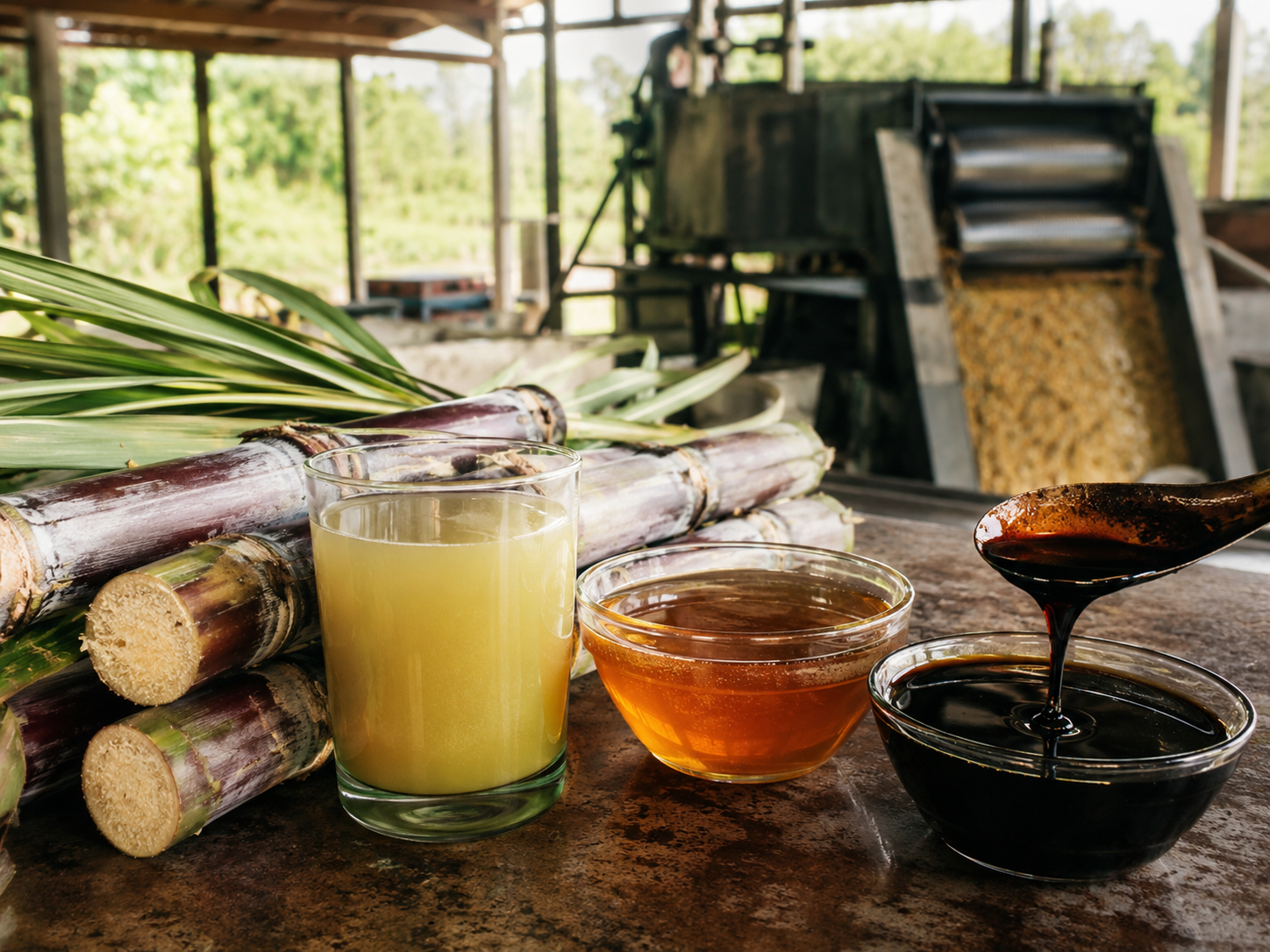
Fresh juice, concentrated cane syrup and molasses are related cane materials, but they represent different stages of processing before fermentation.
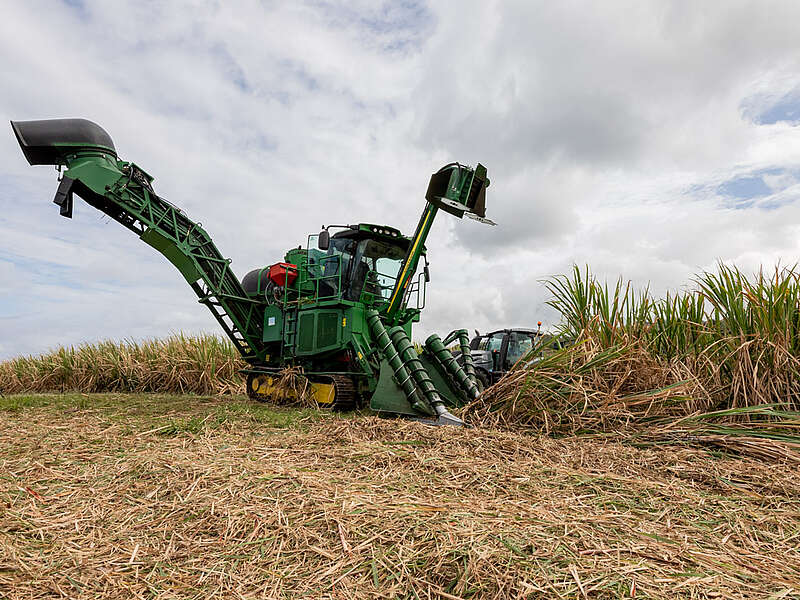
Direct extraction
Sugar cane → crushing → fresh juice → preparation → fermentation.
The extracted juice remains the fermentation material.
Concentrated-juice route
Sugar cane → crushing → cane juice → concentration → syrup → preparation → fermentation.
Water is removed from the juice before the concentrated material is later prepared for fermentation.
Sugar-manufacture route
Sugar cane → crushing → cane juice → concentration → sugar crystallisation and separation → molasses → preparation → fermentation.
Molasses reaches fermentation after crystallised sugar has already been removed from the concentrated cane material.
These are production routes, not universal category permissions. For example, EU rum law permits sugar-cane juice itself and certain molasses or syrup routes, while protected categories such as Martinique AOC Rhum Agricole use a narrower cane-juice framework.
Fresh cane juice keeps the shortest route from crushed cane to fermentation.
Direct does not mean untreated. Juice can still be screened, clarified, adjusted or otherwise prepared before fermentation according to producer practice and the rules governing the spirit.
A chemically active fermentation medium
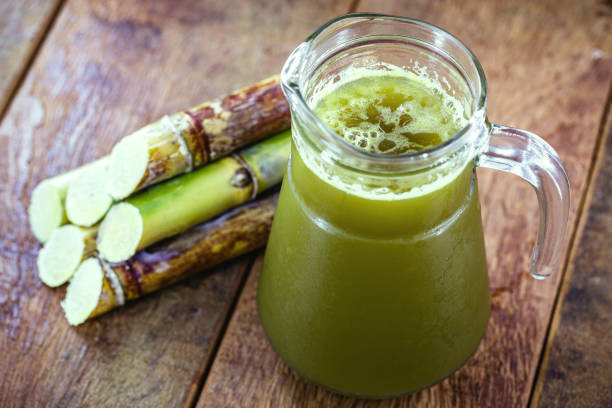
Fresh cane juice contains fermentable sugars, principally sucrose, together with glucose, fructose, organic acids, minerals and other compounds carried from the plant.
The juice changes quickly after extraction through microbial, enzymic and chemical activity. Producers working with fresh juice therefore manage the interval between harvest, crushing, preparation and fermentation carefully.
Preparation choices vary. The important point is that the material entering fermentation still originates directly from the expressed cane juice rather than from a later sugar-manufacturing residue.
Martinique AOC Rhum Agricole is produced exclusively from sugar-cane juice. Cachaça is also a Brazilian cane spirit defined around the fermented juice of sugar cane under current Brazilian standards.
Cane syrup concentrates the juice before fermentation.
This route removes part of the water from cane juice before fermentation. It deserves its own place between a fresh-juice explanation and a molasses explanation.
Cane syrup is not automatically molasses.
When a producer concentrates cane juice without first crystallising and separating sugar, the resulting syrup follows a different production route from molasses.
The word “syrup” is not one globally standardised cane-spirit raw-material term. Producer language and legal definitions can use it differently, so the governing specification and the producer’s own process should be checked.
St. Nicholas Abbey states that its rum is made from estate sugar-cane juice that is stored as syrup to allow production beyond the cane-harvest season. This is a producer-specific method, not a rule for Barbados rum. See the Barbados Rum guide →
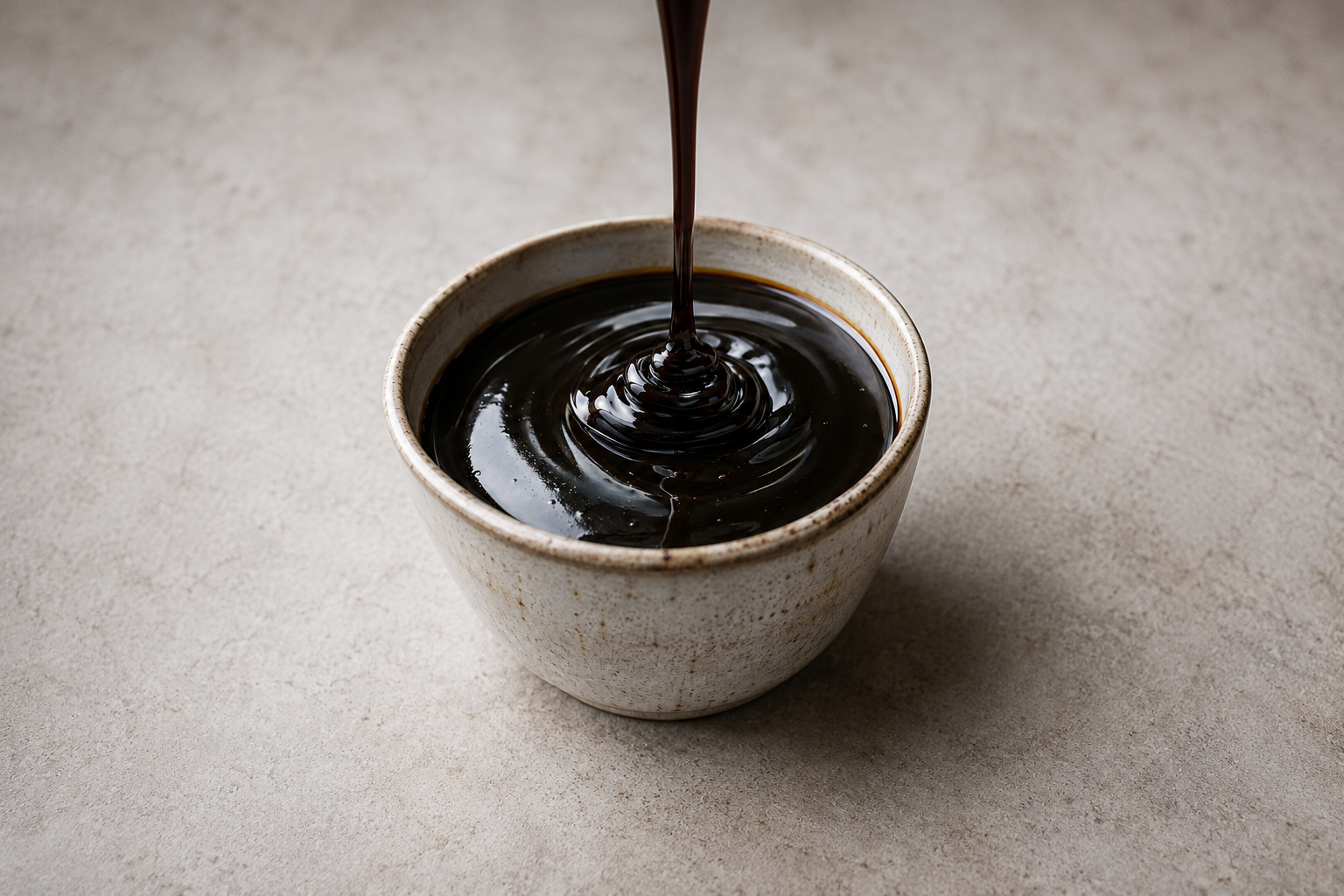
Molasses is created through sugar manufacture before it becomes a fermentation material.
Cane juice is concentrated, sucrose is crystallised and separated, and the remaining dense liquid still contains fermentable sugars and other dissolved material.
Fermentable sugar remains
Molasses can retain sucrose, glucose and fructose together with minerals and other dissolved compounds. Its exact composition varies with the cane, the sugar-making process and the stage at which the material is collected.
Because molasses is concentrated and viscous, producers commonly dilute and condition it before fermentation so that microorganisms have a workable medium.
Molasses describes a family of cane-sugar materials, not one chemically identical liquid.
Molasses is linked to cane-sugar manufacture and crystallisation. Calling it simply a by-product of “refining” removes an important part of how the material is actually formed.
The fermentation medium changes before yeast is added.
Fresh juice, cane syrup and molasses reach fermentation with different concentrations, compositions and handling requirements.
| Feature | Fresh cane juice | Cane syrup | Molasses |
|---|---|---|---|
| Production route | Extracted directly from crushed cane. | Cane juice is concentrated before later fermentation. | Remaining cane-sugar material after concentration, sugar crystallisation and separation. |
| Physical form | Water-rich fresh juice. | Concentrated cane material with part of the water removed. | Dense, concentrated and viscous sugar-manufacturing material. |
| Handling focus | Manage freshness and move promptly through preparation into fermentation. | Manage concentration, storage where relevant, and preparation before fermentation. | Dilute and condition the concentrated material for the chosen fermentation. |
| Terminology | Usually clear when the governing category explicitly requires cane juice. | “Cane syrup” can mean different things in producer and legal language; verify the route. | “Molasses” still covers materials whose composition can vary with sugar manufacture. |
| What it predicts | The starting material gives production context. It does not predict the finished spirit by itself. | ||
The raw material changes the starting environment. Fermentation and distillation determine how that environment is transformed into spirit.
Raw material does not write the finished aroma list.
A molasses-based spirit does not simply taste of molasses, and a cane-juice spirit does not automatically taste grassy or vegetal.
Fermentation transforms the starting material.
Microorganisms convert sugars into ethanol and create flavour-active compounds during fermentation. Distillation then separates and concentrates selected volatile compounds from that fermented liquid.
Maturation, blending and bottling decisions continue changing the final profile. The raw material remains important because it defines the starting medium, not because it supplies a fixed aroma list.
Fresh-juice spirits vary
Grassy, herbal, floral, fruity or earthy notes can be useful descriptors in particular spirits. They are sensory observations, not mandatory consequences of cane juice.
Cane-syrup spirits vary
Cane syrup should not be treated as a sensory midpoint between juice and molasses. Concentration, fermentation and distillation still determine what reaches the spirit.
Molasses-based spirits vary
They can be light and restrained, rich and weighty, or intensely aromatic depending on fermentation, still design, rectification, spirit selection, maturation and blend.
“Molasses rum tastes like molasses” removes fermentation and distillation from the explanation. Those stages transform the starting material and determine what volatile compounds reach the spirit.
Raw material sets the first conditions. Production keeps moving.
The material matters because it shapes the environment in which fermentation begins. Every stage after that can change what is formed, selected, transformed and retained.
Different materials create different fermentation conditions
Fresh juice, concentrated syrup and molasses differ in water content, sugar concentration, minerals, acids, nutrients and other dissolved compounds. Those differences affect how the producer prepares the medium and how fermentation proceeds.
Raw material remains one variable among several
It matters because it shapes the first environment in which flavour development begins. Fermentation, still operation, maturation, blending and bottling remain active variables after that point.
Read the spirit in production order.
One familiar raw-material word should never replace the rest of the production story.
What was actually fermented?
Fresh cane juice, cane syrup, molasses, cane sugar or another material permitted by the relevant category or GI?
How was it fermented?
Yeast, microbial activity, duration, nutrients, temperature and other verified choices.
How was it distilled?
Pot, retort, column or hybrid system, plus rectification and spirit selection where disclosed.
What happened after distillation?
Resting, time in wood, environment, warehouse and finishing where relevant.
How was it blended?
Single component, multiple distillates, maturation lots or another release structure?
What can you verify?
Strength, filtration, colouring, sweetening, dilution and other permitted decisions where genuinely disclosed.
The starting material opens the story. Production writes the rest.
REFSources & Further Reading
Current legal definitions, official appellation material, producer documentation and technical research support the production logic used in this guide.