
Vodka & Neutral Spirits Library / Guide 03
GrainVodka
Starch, Conversion & Grain Character.
Grain vodka begins with starch. Before yeast can ferment anything, the grain has to be milled and its starch converted into fermentable sugar. This guide follows that path, then shows how wheat, rye, corn and barley can influence a more characterful style of vodka.
Scope Guide 02 covers rectification in detail. Guide 06 covers fermentation control. Here we focus on what happens to cereal grain before those stages and what grain character may remain afterwards.
Start inside the grain →Continue where you left off →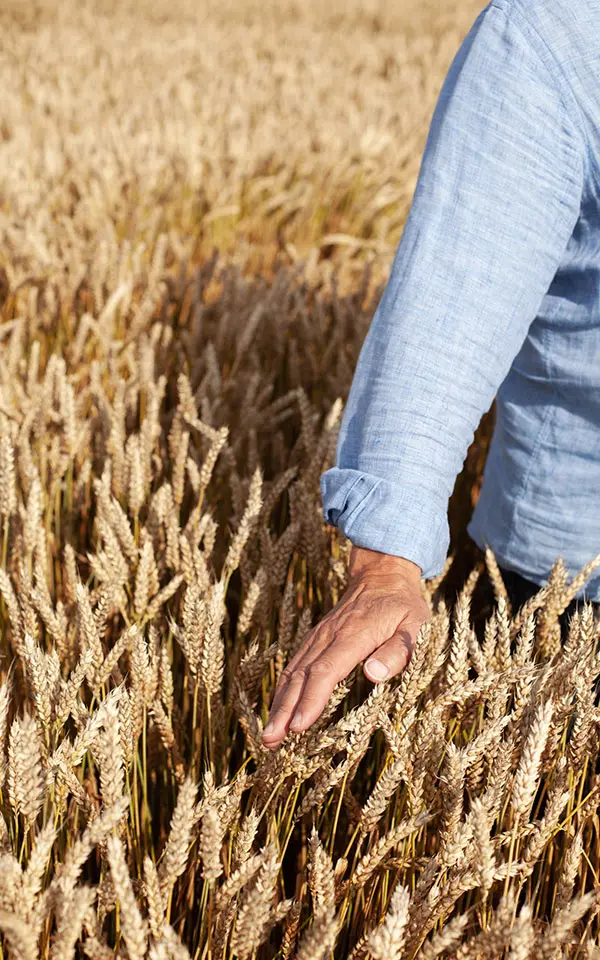
Guide sequence
Follow the grain from the kernel to fermentable sugar, then into neutral-spirit production and finally back to the glass.
Inside the grain
The useful place to start is the kernel itself. Most of the starch sits in the endosperm, protected by the outer parts of the grain.
Why milling comes first
Yeast cannot ferment starch directly. The grain first has to be opened so water, heat and enzymes can reach the starch and convert it into fermentable sugar.
Different cereals are built differently, but the same basic parts help us understand what the distiller is working with.
Protection
The hard outer covering that protects the grain.
Outer layers
Layers around the grain that sit outside the starchy centre.
New plant
The living part that can begin growing when conditions are right.
Starch store
The main store of starch used to make fermentable sugar.
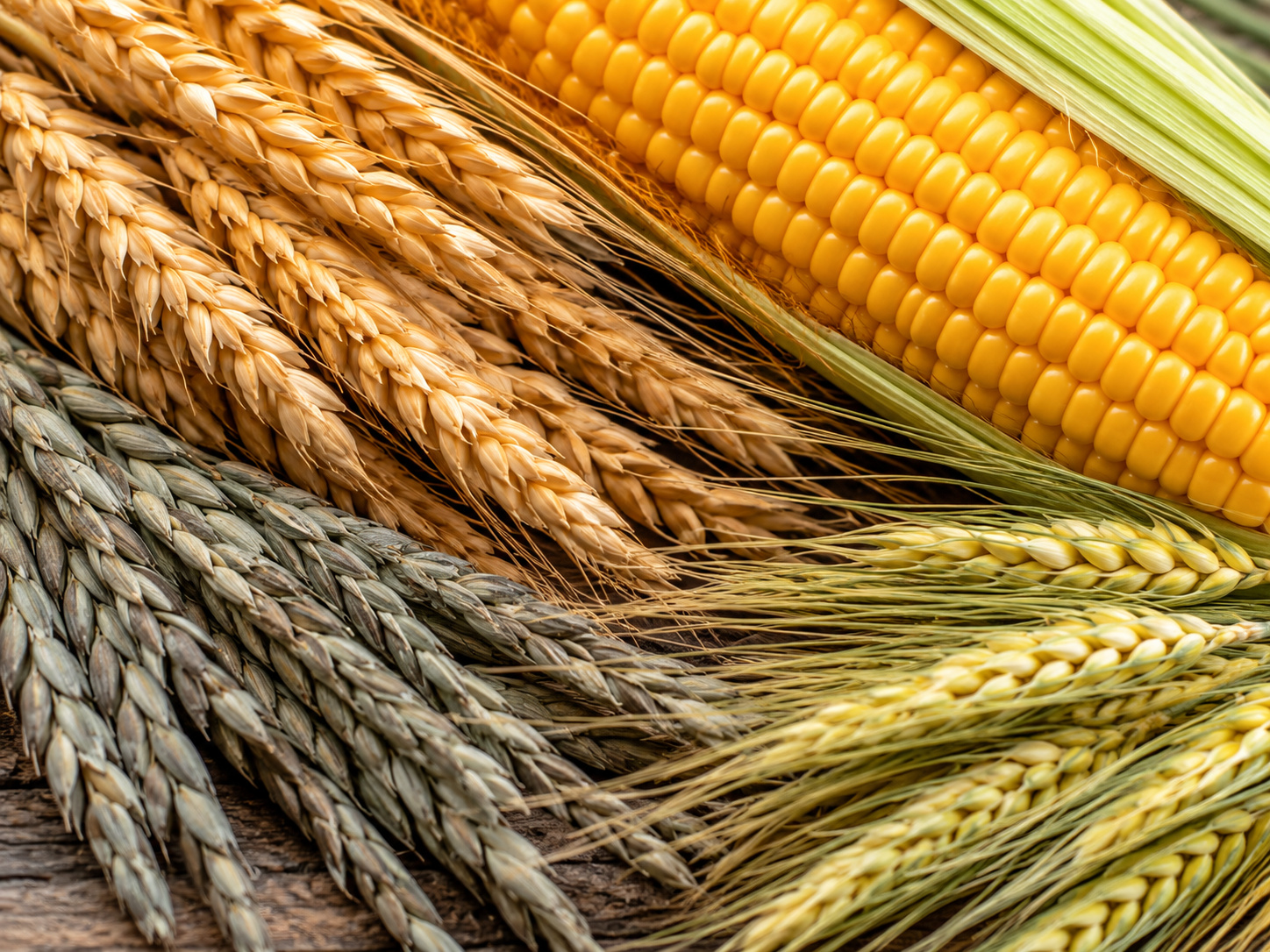
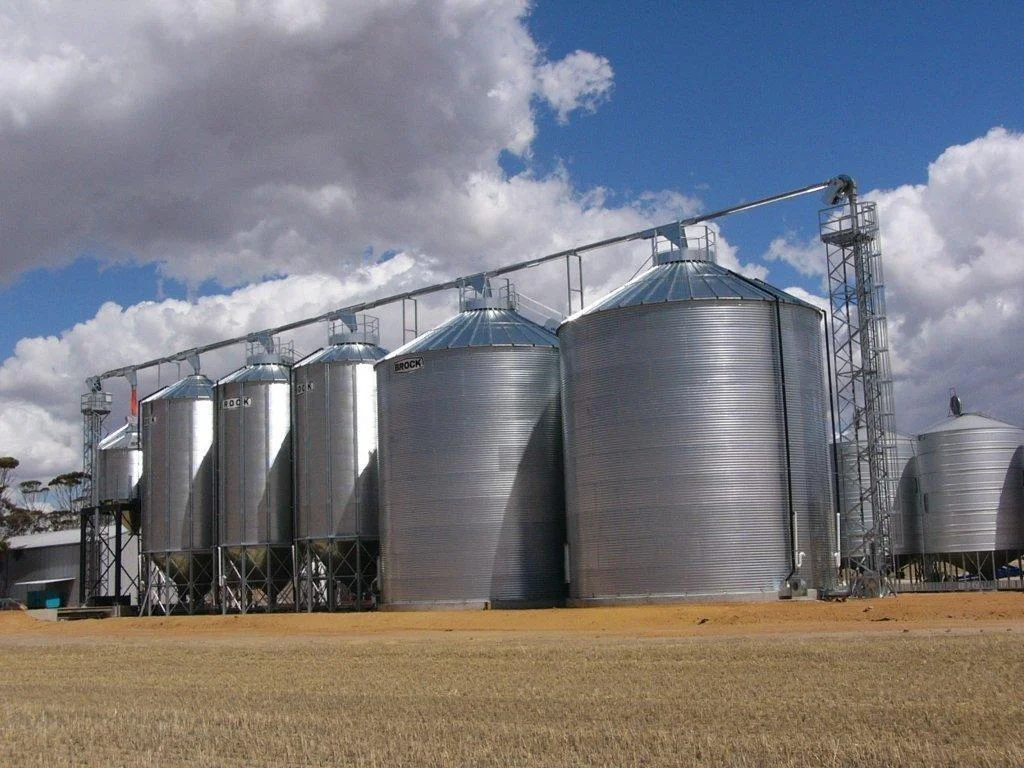
After harvest, cereals can be dried and stored before they move into cleaning, milling and mash preparation.
Turning starch into sugar
Grain stores energy as starch, but yeast needs fermentable sugar. The distiller has to unlock that starch before fermentation can begin.
Keep the sequence simple
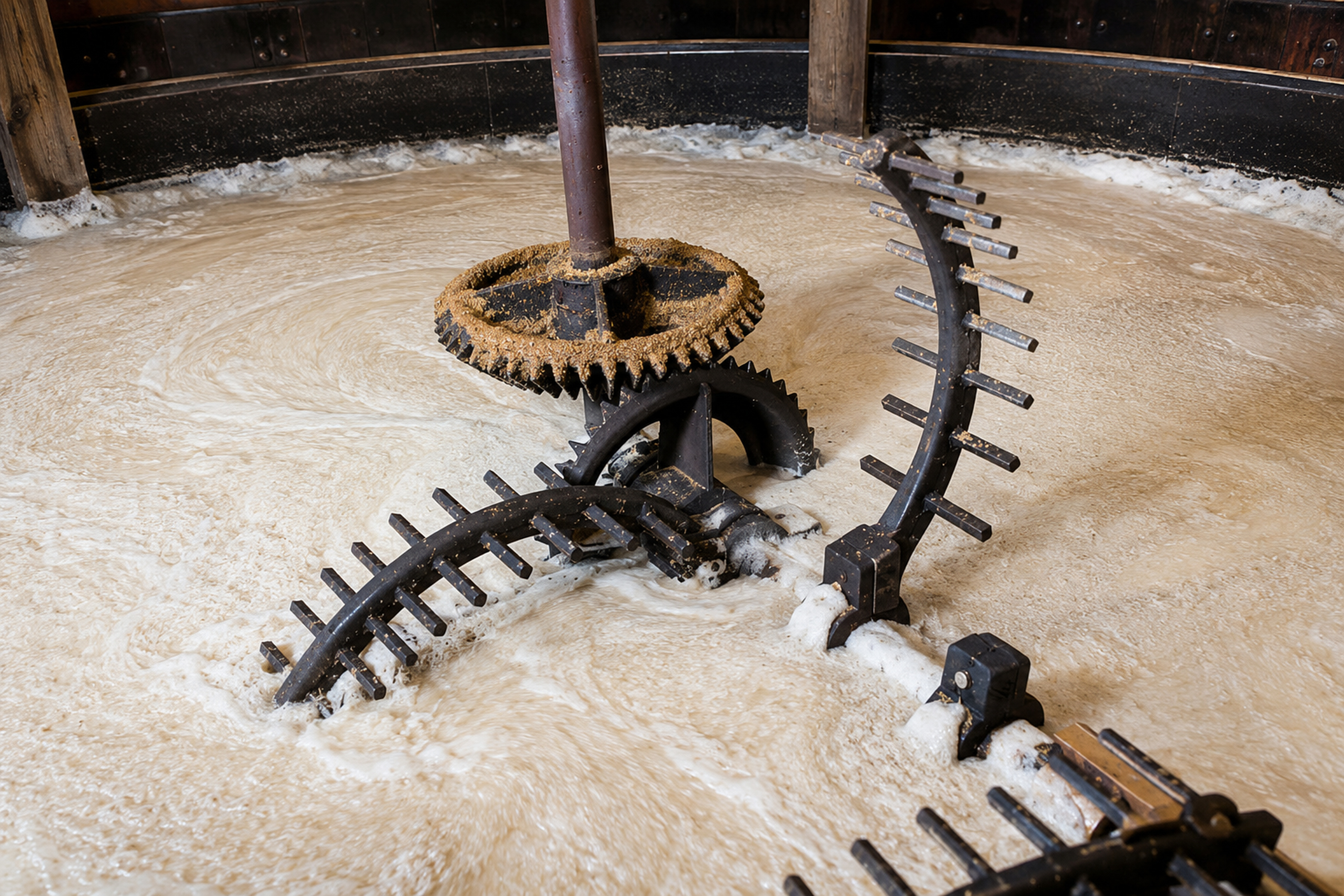
Milling opens the grain. Water and heat help the starch granules gelatinise and become accessible. Enzymes then break the starch down into fermentable sugars.
The grain is crushed so water and enzymes can reach the starch more easily.
Water and heat cause the starch granules to swell and unravel.
Amylase enzymes use water to break starch into smaller sugars.
The converted sugars can now be used during alcoholic fermentation.
α-Amylase starts breaking long starch chains into shorter pieces. Glucoamylase continues the conversion toward glucose. Useful terms — but the main lesson is simply that starch must become fermentable sugar before yeast can use it.
Malted grain vs other grains
Traditionally, malted barley is an important source of enzymes. Other grains are often cooked first and then given an enzyme source so their starch can be converted.
Malting starts the grain growing. During this stage, modification takes place and amylase enzymes become available. Kilning then stops the growth.
Grains such as corn, rye and wheat are more commonly cooked to gelatinise their starch, then mixed with malted barley or another source of enzymes.
Commercial enzymes are another option
Distillers can also use enzymes produced by specialist suppliers. These may supplement malted barley or replace it as the main enzyme source.
The producer needs two things: accessible starch and working enzymes. The exact route can vary from one distillery to another.
Fermentation for neutral spirit
Once fermentable sugar is available, yeast can produce alcohol. For neutral spirit, the producer usually wants an efficient, reliable fermentation with restrained aroma production.
Good conversion and healthy yeast support alcohol yield.
Cultured yeast helps the producer run fermentation more predictably.
Neutral-spirit production generally favours low levels of flavour-active fermentation compounds.
Temperature, pH, nutrients, yeast strain and fermentation time are covered in Neutral Spirit Fermentation. We do not need to repeat those controls here.
From fermented grain to neutral spirit
After fermentation, the alcohol has to be separated and concentrated. How much grain material remains in the fermented feed depends on the producer’s process.
More of the grain material travels forward with the fermented liquid.
Coarser material can be separated before distillation.
A more liquid-led feed can enter the distillation system.
Yeast has converted the fermentable sugars.
The first stage separates and concentrates alcohol from the fermented feed.
Further separation raises strength and reduces more raw-material and fermentation character.
How grain can influence vodka style
Grain character matters most when the producer chooses to retain some of it. Heavy rectification can reduce that signal considerably.
Think in tendencies, not guarantees
Raw material can influence texture, aroma and flavour in a more characterful vodka, but the final result also depends on fermentation, distillation, rectification and finishing.
Subtle grain character
Widely used for vodka. In a more characterful style it can show a gentle cereal profile, but production choices still shape the final spirit.
Firmer, zestier character
Rye vodka can retain a firmer or spicier impression when the producer leaves more raw-material character in the spirit.
Softer, rounder style
Corn is often associated with a softer, rounder profile in more characterful vodka.
Cereal, leaner profile
Barley can contribute cereal character and a leaner palate when enough raw-material character survives production.
These are useful tendencies for tasting and comparison, not fixed flavour rules for every vodka made from that cereal.
Remember the production path
Starch must become sugar
- Milling opens the grain
- Gelatinisation makes starch accessible
- Enzymes break starch into fermentable sugars
- Yeast then produces alcohol
Remember the style question
Neutral does not mean identical
- Different cereals can influence the starting spirit
- Rectification reduces much of that character
- Some vodkas deliberately retain more grain character
- Taste the product instead of relying on a grain stereotype
REFSources & Further Reading
Primary references used to verify grain preparation, starch conversion, fermentation and grain-related vodka style.
Law & geographical indication
U.S. eCFR · 27 CFR § 5.142Primary regulation · neutral spirits, vodka and the separate grain-spirits typePolska Wódka / Polish Vodka · technical specificationPrimary GI specification · permitted cereals, mash preparation, fermentation, distillation and rectificationNeutral-spirit fermentation
Black & Walker · Yeast Fermentation for Production of Neutral Distilled SpiritsAcademic review · cereal preparation, yeast selection, fermentation control and congener managementPauley & Maskell · Role of S. cerevisiae in Gin and VodkaAcademic review · yeast function in neutral-spirit productionStarch conversion & analysis
Novonesis · liquefaction technical materialTechnical supplier · gelatinisation, α-amylase and dextrin formationNovonesis · saccharification technical materialTechnical supplier · glucoamylase-led conversion toward fermentable sugarWiśniewska et al. · Differentiation Between Spirits According to Botanical OriginExperimental research · volatile fingerprints in rye, triticale, wheat and maize distillatesWiśniewska et al. · The Analysis of VodkaReview · trace volatile and analytical composition of vodkaNamed production examples
Belvedere Organic VodkaOfficial product page · 100% organic Polish ryeAbsolut VodkaOfficial product page · Swedish winter wheat and continuous distillationGrey Goose · production FAQOfficial page · soft winter wheat from Picardy and single distillation of fermented wheat mashTito’s Handmade VodkaOfficial page · corn and pot-still productionContinue the sequence
Guide 04 · Potato Vodka
Compare a starch-heavy, high-viscosity route and see how potato changes handling, conversion and texture.