Gelatinisation
Hydrated starch loses its native granule structure as it is heated through its transition range.

Vodka & Neutral Spirits Library / Guide 04
Starch, Conversion & Tuber Handling.
Potato vodka begins with a water-rich tuber rather than a dry cereal kernel. The production challenge is to select useful dry matter, release the starch, control a highly viscous mash and send a clean, fermentable feed toward distillation.
Scope Vodka Fundamentals owns the category overview. Guide 02 owns rectification and multi-column systems. Here, the focus is what potato changes before that hand-off.
Start with the tuber →Continue where you left off →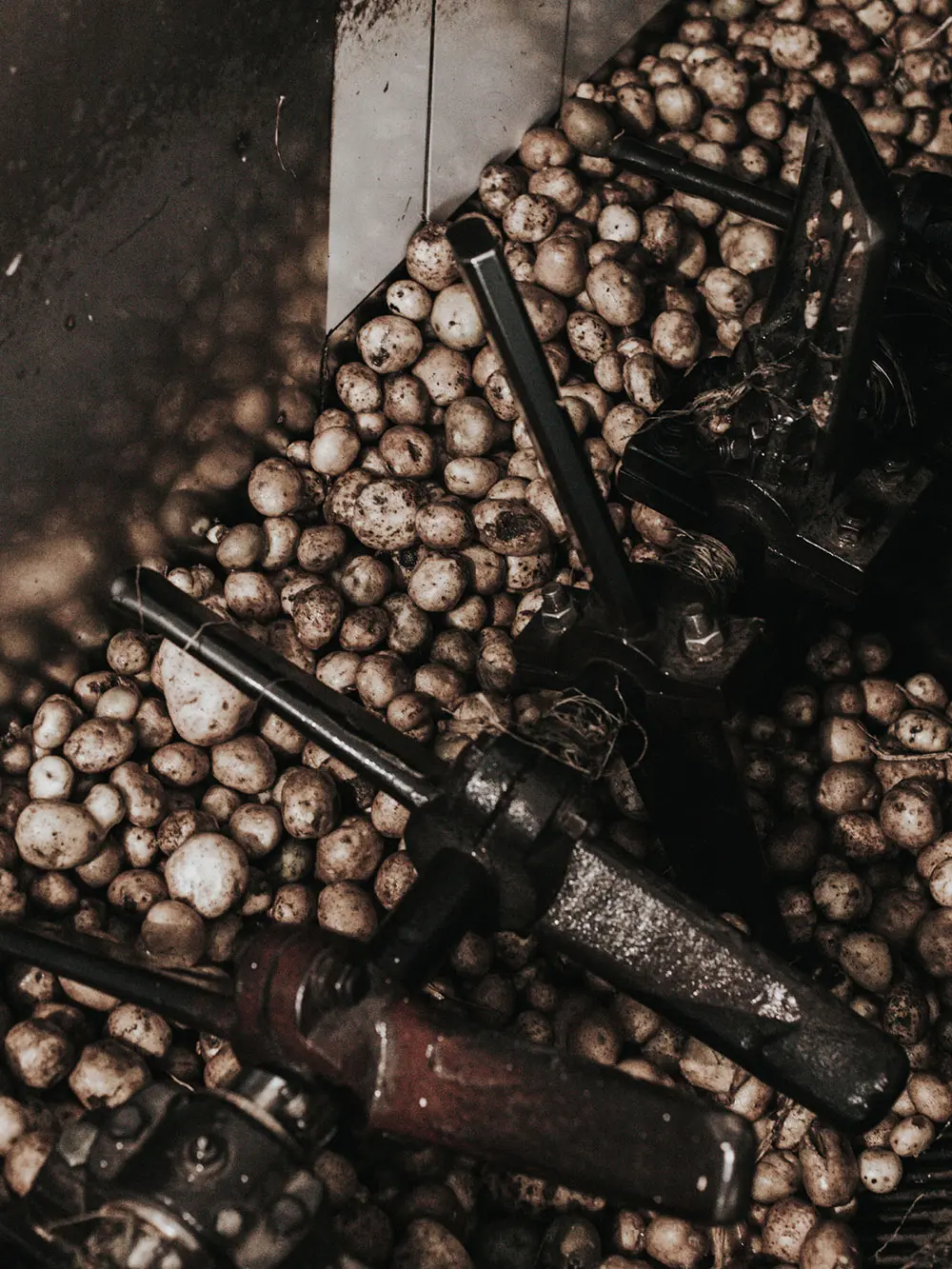
Follow the tuber as production material: water and dry matter → variety and starch → physical preparation → conversion → fermentation → viscosity and yield → distillation hand-off → finished-vodka interpretation.
Potatoes carry much more water than cereal grain. The useful production question is therefore not simply how many kilograms arrive, but how much dry matter and fermentable starch those kilograms contain.
A fresh potato is largely water. Starch makes up most of the useful carbohydrate inside its dry matter, alongside protein, fibre, minerals and other solids. Variety, growing conditions and storage can change that composition.
For distilling, this makes potato a handling problem as well as a carbohydrate source: more wet raw material may need to be moved, washed and processed to deliver a given amount of starch.
Compare potato by dry matter and starch availability, not by fresh weight alone.
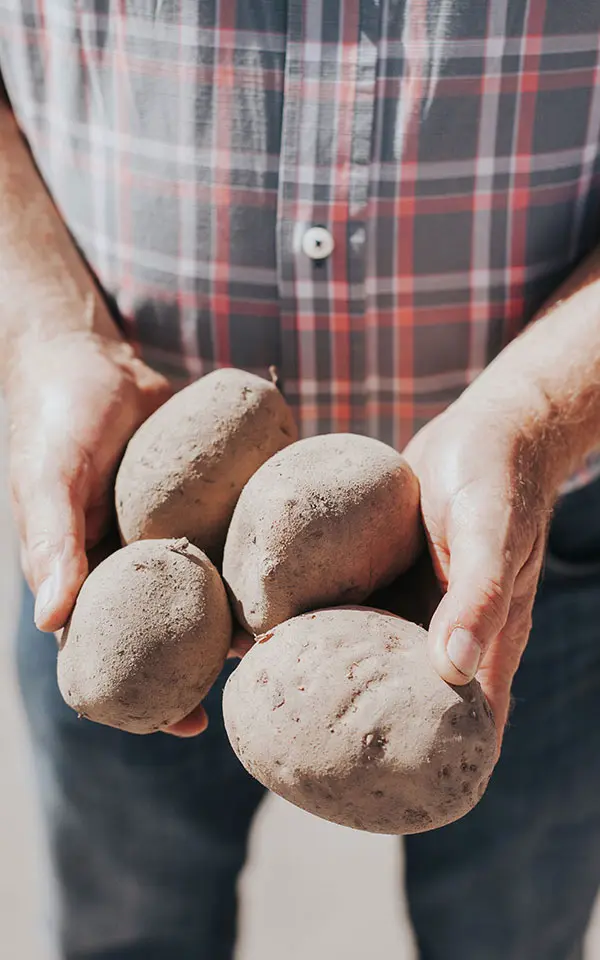
High moisture changes transport, storage and the amount of raw material handled per unit of fermentable starch.
Dry matter is a better starting point for assessing how much solid material the tuber contributes.
Starch must still be released and hydrolysed before yeast can use it efficiently.
“Potato” is a botanical category, not one standardized distilling material. Variety and composition can materially change the amount of starch delivered and how the mash behaves.
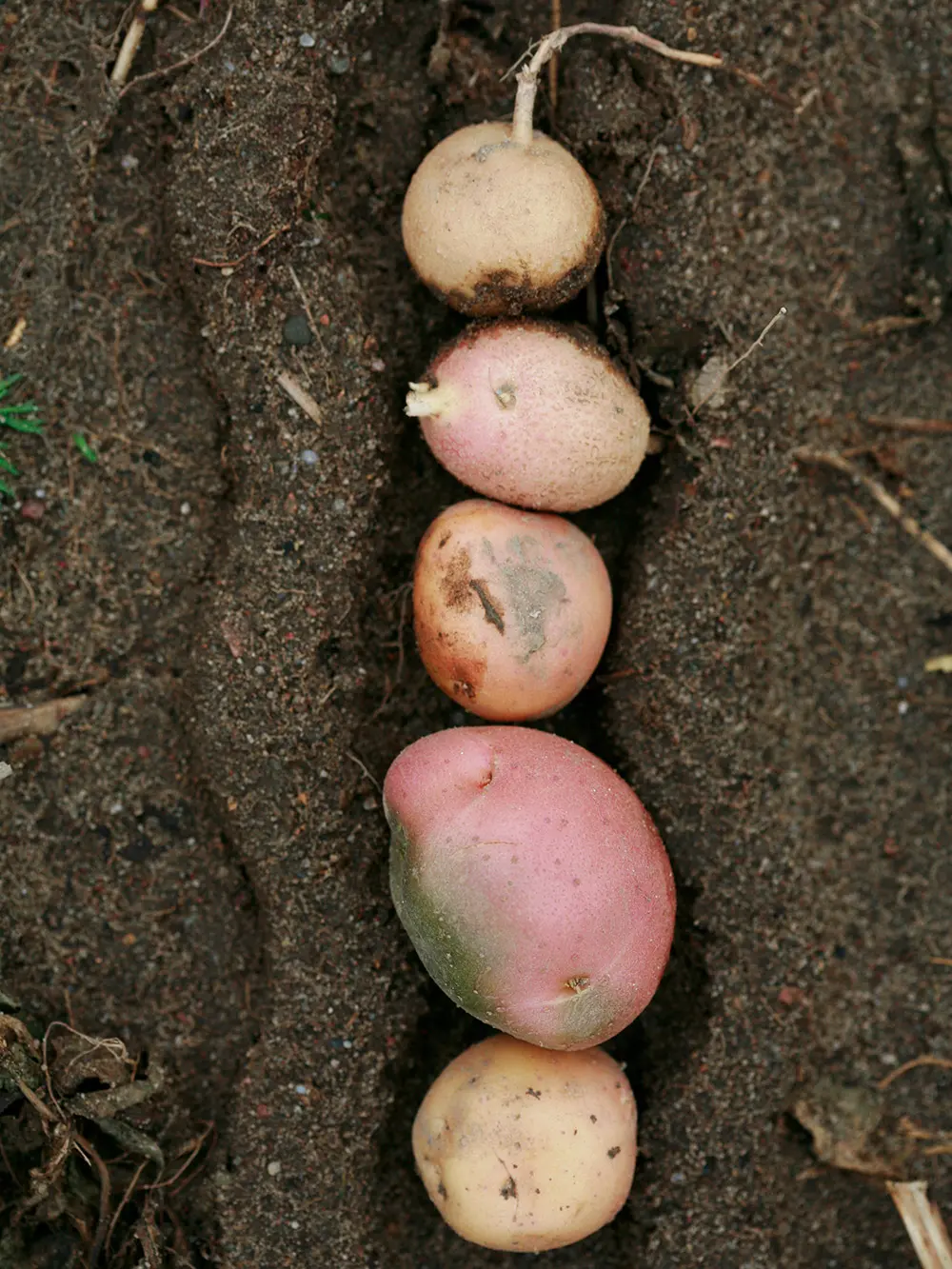
The official Polska Wódka specification recognizes ware or starch-rich potato varieties for protected Polish Vodka. That is a useful production clue: distilling suitability is connected to composition, not simply to whether a potato is edible.
Higher dry matter can concentrate useful starch in each tonne of fresh potatoes, but it does not create a universal flavour outcome. The chosen variety still enters a chain of washing, preparation, conversion, fermentation and purification.
Variety is meaningful production information. It should not be converted automatically into a tasting note.
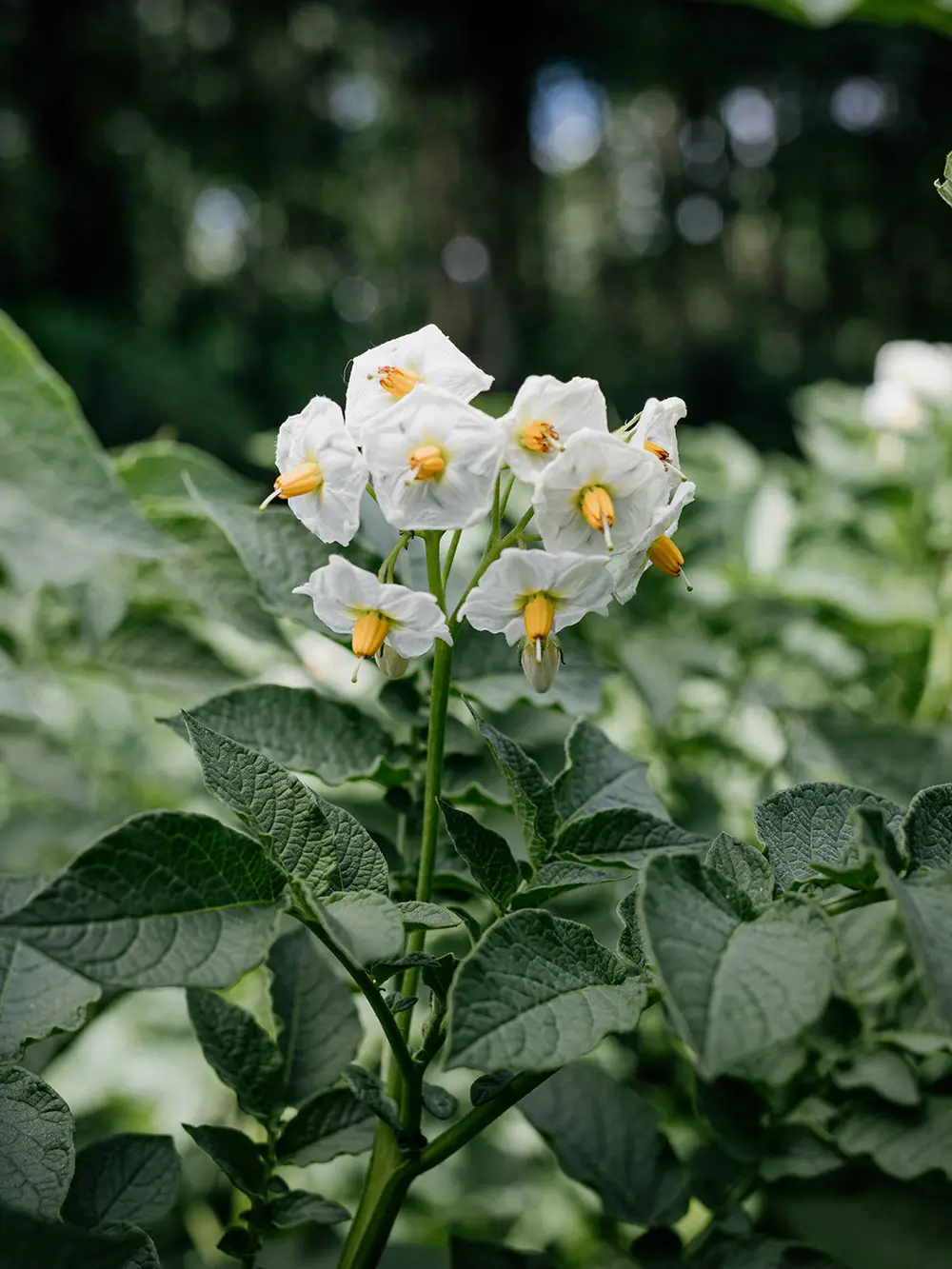
Potato growth · Chopin · Krzesk, Poland
The white blossoms belong to Solanum tuberosum, the potato plant whose underground tubers become the distilling feedstock. Chopin’s field-to-bottle sequence says its high-starch potatoes are planted around mid-April, the plants begin flowering about 10 weeks later, and harvest follows in mid-to-late September.
Why it matters: the flower marks a crop stage, not a flavour cue. The harvested tubers are the raw material selected for starch and processing performance.
Yeast cannot ferment intact potato starch. The plant tissue has to be disrupted and the starch made accessible before conversion can proceed efficiently.
Potatoes are washed and physically reduced before starch conversion. Traditional and modern plants can use different combinations of cutting, crushing, steaming, cooking, pressure and enzyme-led processing.
The Polish Vodka specification explicitly allows high-pressure cooking as well as physical starch-release methods without heating. That makes the strongest teaching point simple: the required function is starch access; one universal cooking recipe does not exist.
Soil and foreign material are removed before the tuber becomes process feed.
Mechanical preparation reduces the intact tuber so water, heat and enzymes can reach the starch more effectively.
Heat, pressure, physical treatment or a combined strategy prepares the starch for hydrolysis.
Cooking is a possible route to starch release. It is not the definition of potato-vodka production.
Once potato starch is accessible, heat and enzyme systems work in sequence: first opening the starch structure, then reducing long chains, and finally creating fermentable sugars.
Gelatinisation, liquefaction and saccharification are connected, but they are not the same operation. Each solves a different problem in turning potato starch into a fermentable feed.
Potato starch can swell strongly and create high viscosity. Exact operating temperatures and enzyme doses depend on variety, mash composition and the specific enzyme system, so they should not be taught as one vodka standard.
The tuber has been disrupted and the starch is available for conversion.
Hydrated starch loses its native granule structure as it is heated through its transition range.
α-Amylase shortens long starch chains, helping reduce mash viscosity and create smaller carbohydrates.
Glucoamylase continues hydrolysis toward fermentable glucose for yeast.
The converted mash is ready to move into fermentation.
α-Amylase and glucoamylase are not two names for the same job: one primarily shortens starch chains; the other continues conversion toward fermentable glucose.
Once starch has become fermentable carbohydrate, yeast performance depends on the composition and physical condition of the converted potato mash.
The Polska Wódka specification reports an average fermentation of two to three days in that protected production tradition. Chopin, by contrast, currently describes a two-week fermentation for its potato mash.
Those two documented examples make the lesson clear: “potato vodka ferments for X days” is not a reliable category rule. Yeast strain, sugar concentration, temperature, nutrition, contamination control and the producer's target all shape the actual window.
Fermentation duration belongs to a specific production system; it is not a sensory shortcut for potato vodka.

Potato production becomes most distinctive operationally when the mash has to be mixed, pumped, heated and converted at useful throughput.
Potato starch has strong swelling and pasting behaviour. As starch is hydrated and heated, viscosity can rise sharply before liquefaction brings it back under control. That affects mixing, heat transfer and pumpability.
Yield is equally easy to oversimplify. Fresh-potato tonnage is a poor comparison with dry cereal tonnage because the tuber carries much more water. The useful chain is dry matter → recoverable starch → fermentable sugar → ethanol recovered.
Viscosity determines how easily enzymes, heat and substrate remain evenly distributed.
Thick mash can make temperature control and energy transfer more difficult.
The plant must handle liquid plus suspended potato solids without treating the mash like clean sugar solution.
Raw-material efficiency depends on composition and recovery through the whole conversion and fermentation chain.
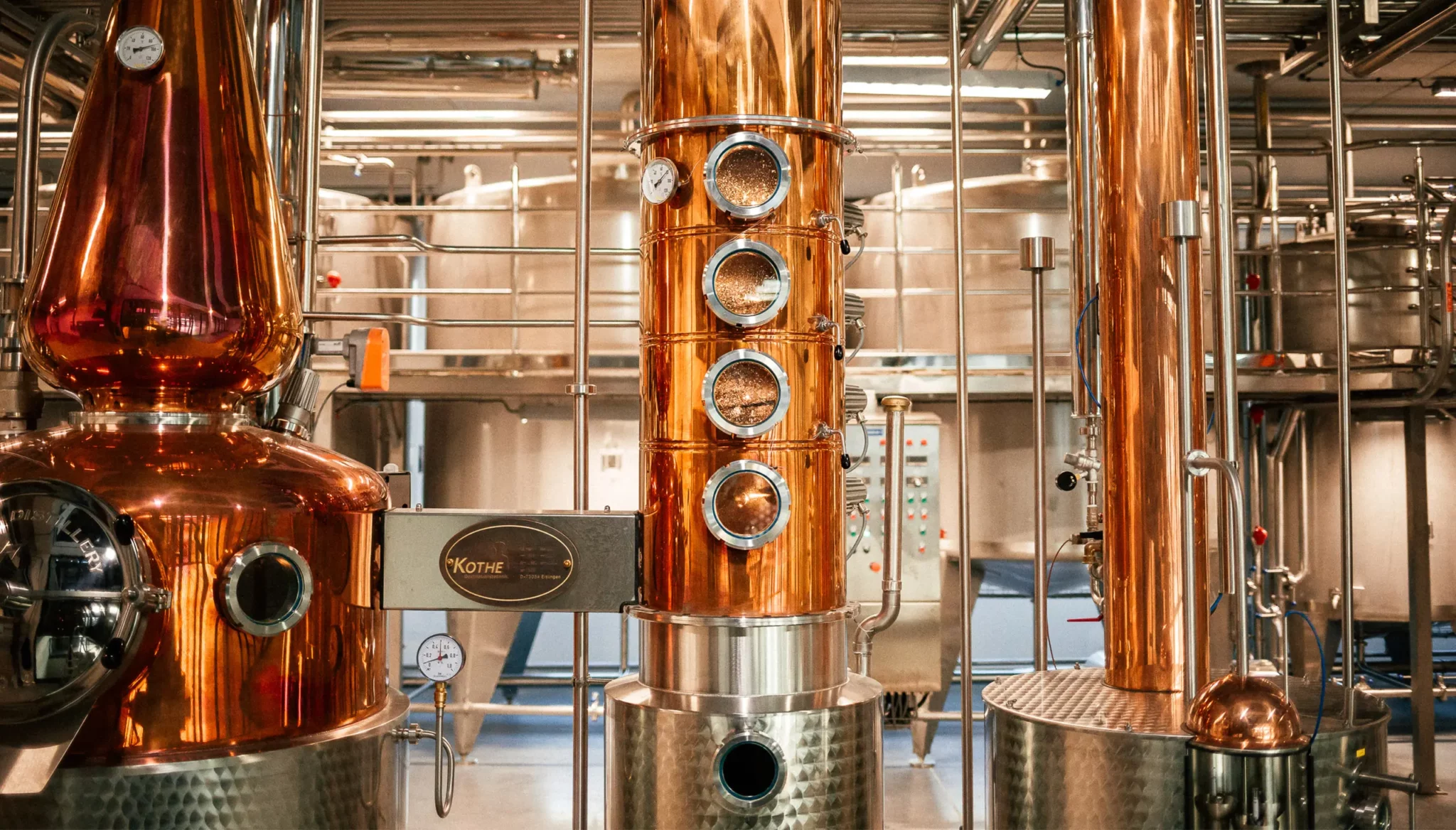
Potato determines the upstream feedstock. It does not dictate one still shape or one number of distillation passes.
The official Polish Vodka specification permits fermented potato mash to be distilled in columns or pot stills, after which the agricultural distillate is rectified to reduce fermentation by-products and increase purity.
That is the correct hand-off for this guide. Tray design, reflux, draw points and two-, three- or five-column neutral-spirit systems belong in Guide 02 rather than being repeated here.
Potato chooses the feedstock problem. The separation target and plant design choose the distillation architecture.
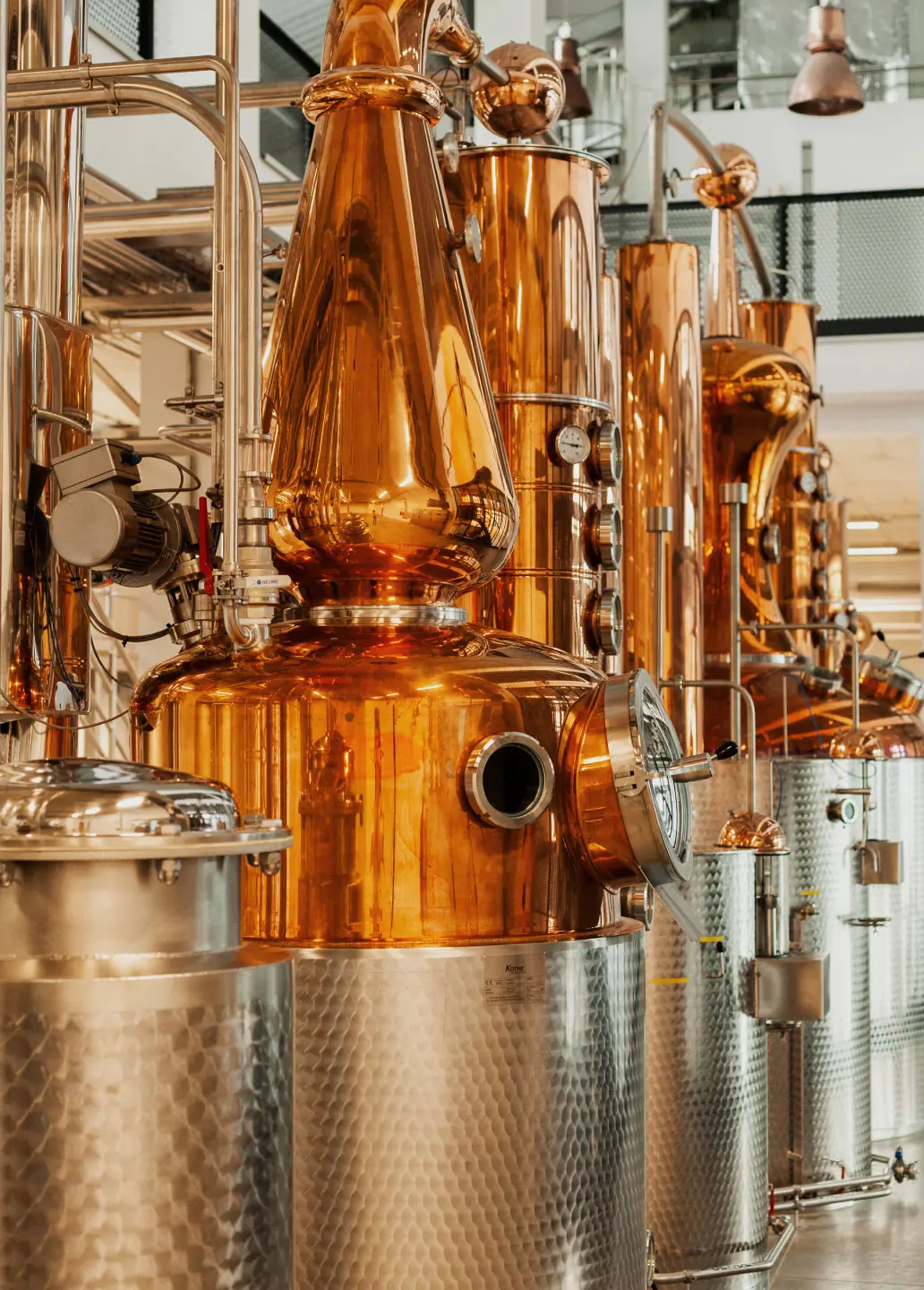
A documented potato base is useful production information. It still does not prove that every potato vodka must be creamy, earthy, sweet or full-bodied.
Research on raw agricultural spirits shows that botanical origin can leave measurable volatile differences before full purification. How much survives into finished vodka depends on fermentation, distillation, rectification and later finishing.
Behind the bar, the strongest language is specific: document the raw material, then describe the actual bottle you taste.
“Potato-based” identifies the feedstock. “Creamy,” “earthy” or “full-bodied” describes a particular sensory observation or brand description. One does not prove the other.
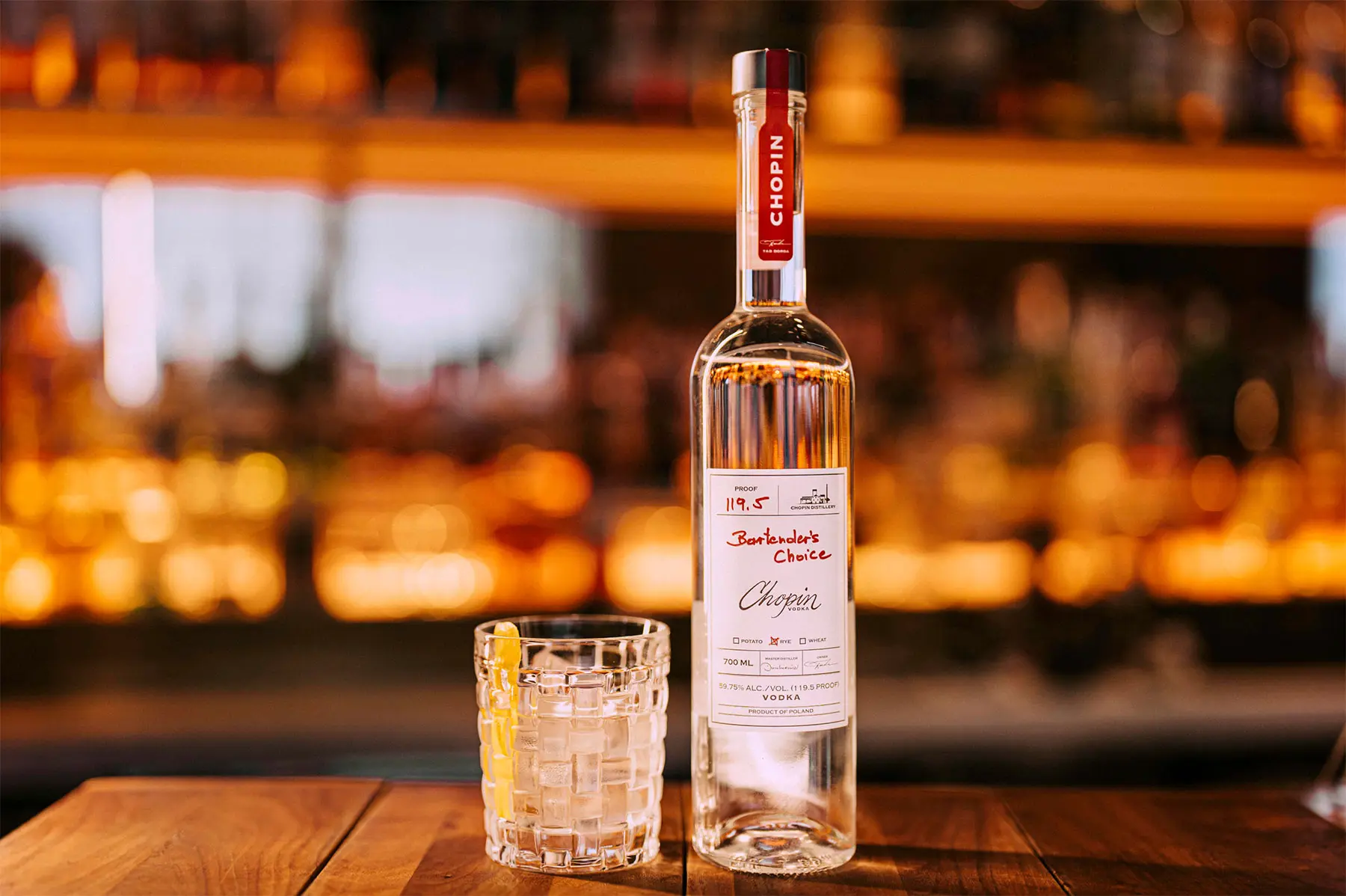
Chopin describes a high-starch potato variety, fresh delivery, washing, steam cooking, its own yeast strain and an extended fermentation before distillation.
The current brand identifies its base as 100% Polish potato spirit and describes fermentation, distillation, rectification, dilution and filtration as separate production stages.
A Pennsylvania example using locally sourced potatoes, showing that potato vodka is not confined to one geography or one still narrative.
Keep the distinction: these are real production examples, not fixed flavour templates for the potato category.
Say “potato-based” when the raw material is documented. Say “creamy” only when that texture is actually present in the vodka you are assessing.
Read the tuber
Read the bottle
Primary legal, geographical-indication, academic and named-production sources used for this focused potato-vodka guide.
Law & GI
EU Regulation 2019/787 · consolidated textVodka category requirements, methanol limit and raw-material labelling frameworkPolska Wódka / Polish Vodka · technical specificationPotato varieties, washing, starch release, hydrolysis, fermentation, distillation and rectificationPotato spirit & starch
Balcerek et al. · The Impact of Production Technology on the Quality of Potato SpiritResearch · pretreatment, starch hydrolysis, fermentation architecture and yeast effectsTong · potato starch structure, function and applicationsReview · starch composition and physicochemical behaviourIdentification of Botanical Origin of Raw SpiritsResearch · analytical differentiation of raw spirits including potato originNamed production examples
Chopin Vodka · DistilleryOfficial production description · potatoes, preparation, fermentation and distillationLuksusowa VodkaOfficial brand material · 100% Polish potato spirit and production sequenceBoyd & Blair Potato VodkaOfficial product material · Pennsylvania potato-vodka exampleContinue the sequence
Step beyond grain and potato into grape, cane, beet, pea, whey and other vodka feedstocks.